Sunday, January 2, 2011

The Wild Swans

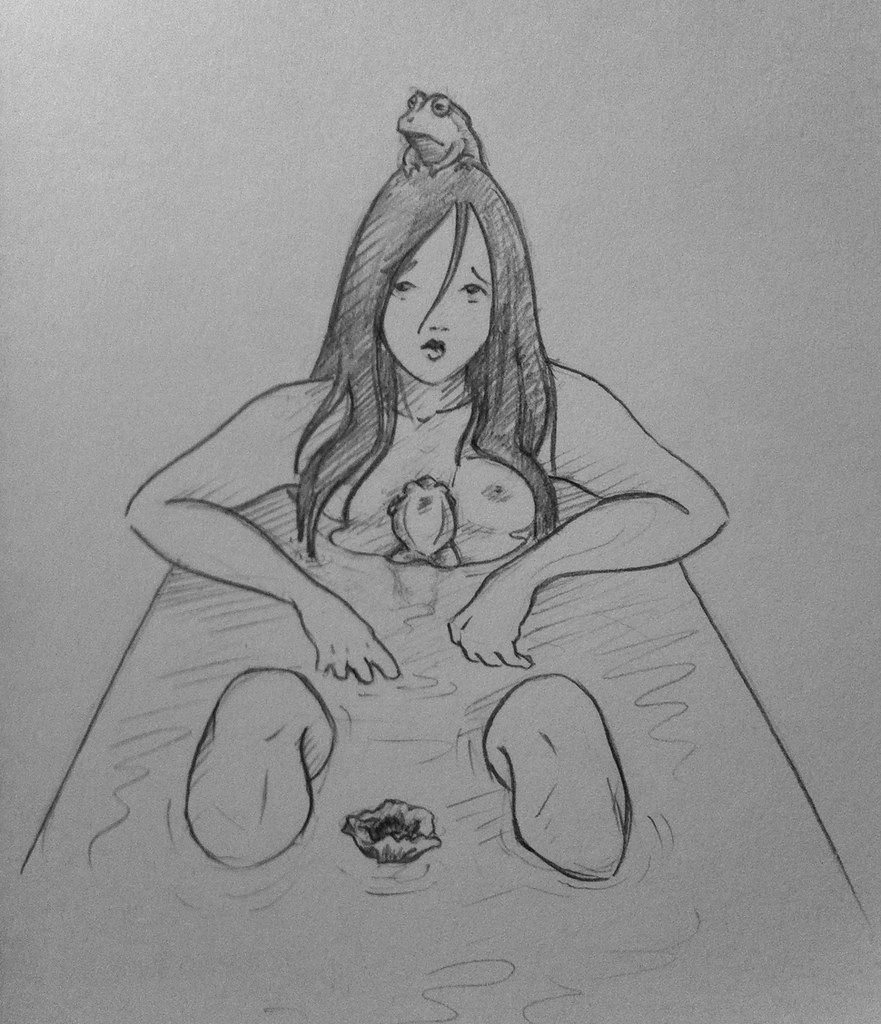
Today's offering is The Wild Swans.  No time for comparing translations today - I was far too busy drawing boobs.

... and the third snuggled as close to her heart as it could.

Have I mentioned that I'm in love with my Moleskine sketchbook?  Graphite flows onto its pages like a velvety dream.

Sunday, December 12, 2010

The Steadfast Tin Soldier

I read the Haugaard translation of Andersen's The Steadfast Tin Soldier (a.k.a. The Brave Tin Soldier), but I have yet to read the older translation.  (Though I can tell you right now I prefer the decision to use the word "brave" rather than "steadfast" in a fairy tale / children's story - not because it is a word that children are more likely to know, I just think it's warmer and more evocative of an emotion.)   I feel the need to mention this, as this blog has become nearly as much a study of the differences between the older and newer translations as it is a place for my little drawings.  As often is the case, the part of the story that screamed out to me to be illustrated was not necessarily a vital part of the story.  Nonetheless...

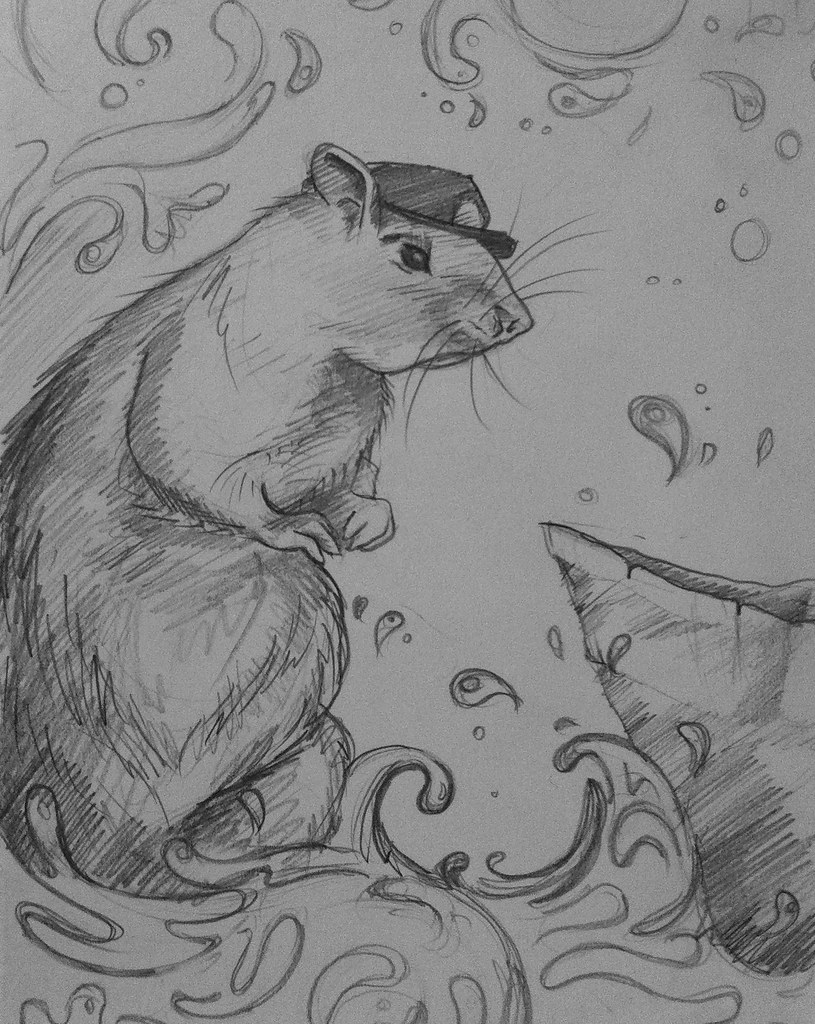
"Have you got a passport?  Give me your passport!"

Friday, December 10, 2010

The Daisy

What can I say about The Daisy?  It turned out to be much darker of a tale than I anticipated when I first read the title.  A short little story about embracing what pleasures life has to offer while you have the chance.  I've been dabbling in digital art of late, so here's my take on The Daisy in a quick digital drawing.
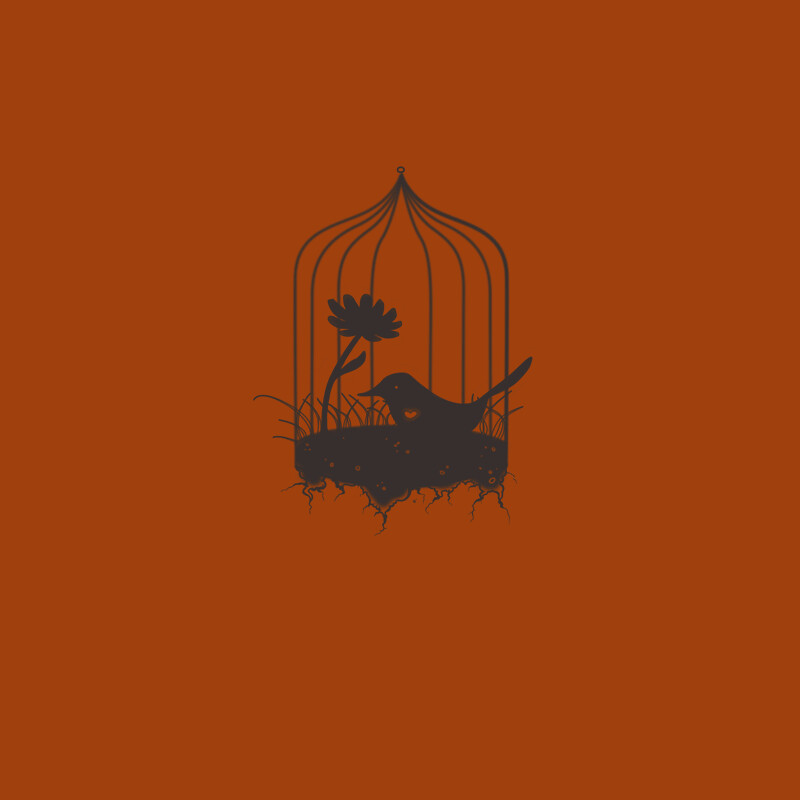
Bewailing its Lost Freedom

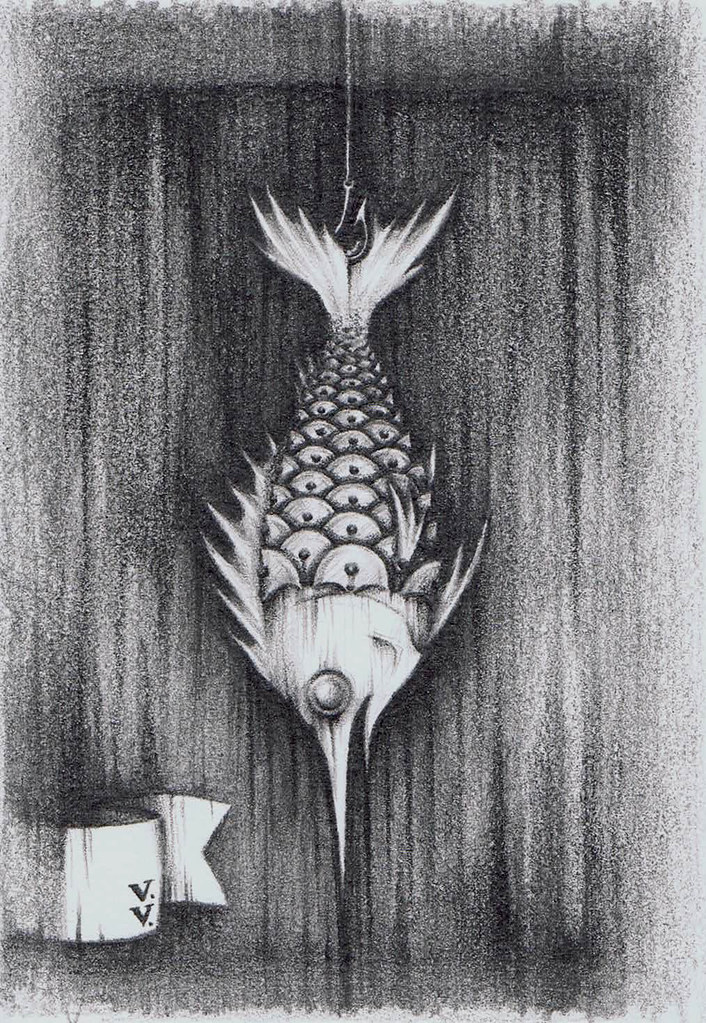
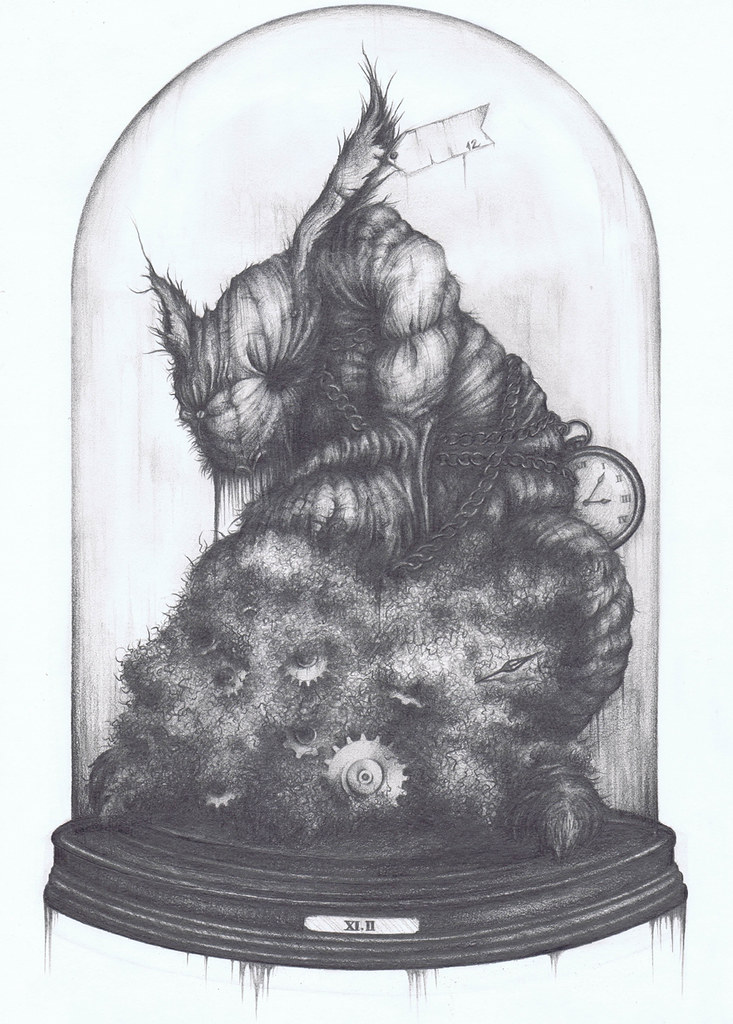
Oh, by the way, did I mention that the previously titled Steampunk Taxidermy series is finished?  Well, it is, and now I've taken to calling it Unnatural Miscellany, after the late 18th- and early 19th-century publication The Naturalist's Miscellany.  The final piece:
∅

Sunday, November 28, 2010

Nothing But Meat

I wrote previously that I had an especially captivating image (in my opinion) selected to illustrate for The Magic Galoshes / The Goloshes of Fortune.  I went on to mention that I've been referencing no fewer than three different translations of Andersen in this project, so some discrepancies are to be expected.  The image I've chosen to illustrate this time is described thusly by Haugaard and H. P. Paull (translator of the online [public domain 1872] translation I've been referencing), respectively:

"Now he was crawling on his hands and knees through a butcher shop.  Everywhere there was meat and more meat."


"Next he crept on his hands and knees through an overfilled butcher’s shop; there was meat, nothing but meat, wherever he stepped..."

I prefer the Paull translation, personally.
Without further ado, here is a sketch I've done based on that line.  There is a pretty good chance that this sketch will become a painting or a more finished drawing one of these days, as I am rather fond of it.

Meat, Nothing But Meat

Thursday, November 25, 2010

More Steampunk Scans

Honestly, I'm still not completely thrilled with the quality of these scans, but at least they don't have the glare problem that plague those awful iPhone photos I take so many of.

V.V


XII.II


VIII.XXIX

P.S. - The Raven, probably the final piece in this series, is now complete as well.  I have no pictures suitable for posting here yet, but once I've got one, I'll post it.

Thursday, November 11, 2010

Some Notes on Galoshes / Goloshes

In writing my previous post, I thought that "goloshes" looked funny (I could've sworn it was "galoshes"... Hm.)  However, both my public domain Kindle translation of Andersen and the online version that I linked to in my post used the "goloshes" spelling, so I left it that way, dismissing my suspicion as a mistake on my part.  Earlier on this blog I wrote that I was using the Erik Christian Haugaard translation for this project.   For the sake of integrity, I guess I'll come clean now and admit that I've been primarily reading the Kindle version these days for convenience - I love being able to save my little highlights as I go along and then browse through them so easily later.  Anyway, when someone else mentioned the bizarre-looking spelling of "goloshes" in my post, I decided to investigate.  Pulling my nearly-abandoned Haugaard translation (1974) from the shelf, I found that Haugaard not only uses the "Galoshes" spelling, but has also translated the title as "The Magic Galoshes," not "The Goloshes of Fortune," as so many other translators have done. The foreword of the 1974 volume mentions Haugaard's choice to make the substitution in the effort to be more accurate "in projecting the idea that the galoshes themselves were magic."  Okay.  That's not a whole lot of information.  Wikipedia yielded only that,

"'Goloshes' appears to be the older spelling of galoshes used previously in Great Britain. The spelling perhaps changed around 1920 to the present-day spelling. A discussion took place in November 2007 on the Victoria Web Discussion group."

So that explains why older translations use the 'O' spelling, and the 1974 Haugaard translation uses the more modern 'A' spelling.  Exciting stuff.  The Victoria Web Discussion Group, incidentally, requires a subscription and login to access their database (and whether or not a subscriber would be able to easily locate an obscure discussion on the word "goloshes" is yet another variable), so there ended my quest.

End the most boring blog post in the history of ever.

Monday, November 8, 2010

Now With More Words Than Pictures!

As another month has passed me by without progress on the Hans Christian Andersen project, I find myself compelled to readjust the focus of this blog yet again.  I suppose one could call it a success; as my mission statement of sorts (back in January) announced that the purpose of giving myself the "assignment" of illustrating Andersen's tales was to somehow trick myself into creating other art.  Since August I have been primarily absorbed in working on my Steampunk Taxidermy (working title) series.  October saw not only the completion of likely the most complicated piece in the series, but also my very first book cover design, a project I greatly enjoyed working on.  Now, a week into November, chilly, dark six o'clocks alleviate some of the guilt I feel for spending entire evenings chained to my desk.  Hence, the Raven, next (and largest) of my Steampunk drawings, is well on his way.


This does NOT mean that I am abandoning the Hans Christian Andersen project.  Quite on the contrary, I've had a delicious (literally - but that's all I'm telling for now!) image from The Goloshes of Fortune in my mind since July. (Thank you, Kindle, for documenting just how long it has been since I read it...)  If you haven't read The Goloshes of Fortune (and you probably haven't), I highly recommend it.  While not all the Andersen tales I've read so far have been worthwhile, this one is lengthy, but a delightful read.  In fact, I highlighted several lines that I was considering for my illustration before I came across the one that I absolutely had to use.  If I haven't convinced you to read it already, maybe these will whet your apetite.

"Their shapes were too graceful, their complexions too delicate, and the cut of their dresses much too elegant.  They were two fairies.  The younger was not Fortune herself, but the chambermaid of one of Fortune's attendants, who carries about her more trifling gifts."

"In a very few seconds the watchman had travelled more than two hundred thousand miles to the moon, which is formed of a lighter material than our earth, and may be said to be as soft as new fallen snow."

"The materials of which it was built seemed just as soft, and pictured forth cloudy turrets and sail-like terraces, quite transparent, and floating in the thin air."

"The first heart he entered was that of a lady, but he thought he must have got into one of the rooms of an orthopedic institution where plaster casts of deformed limbs were hanging on the walls, with this difference, that the casts in the institution are formed when the patient enters, but here they were formed and preserved after the good people had left. These were casts of the bodily and mental deformities of the lady's female friends carefully preserved."

"Then he entered the heart of this man's wife; it was an old, tumble-down pigeon-house; the husband's portrait served as a weather-cock; it was connected with all the doors, which opened and shut just as the husband's decision turned."